Learn to Swim
Teaching a Child to Swim
A calm, step by step way to teach a child to swim: water confidence, floats, breathing, first strokes, and when formal lessons help most.
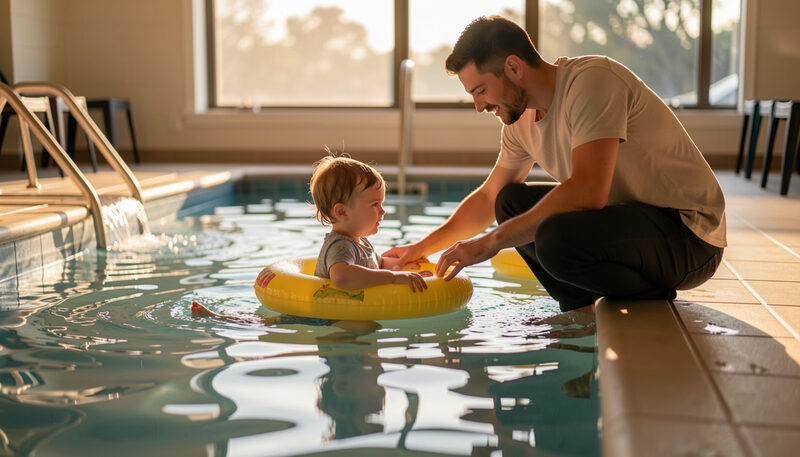
Most children learn to swim in the end, but the way they get there shapes whether they enjoy the water for life or avoid it. The parent's job is not to coach. It is to make the water a place where the child feels safe, to keep the sessions short and regular, and to hand the technical work to a qualified teacher. This guide sets out a calm, step by step approach that works alongside lessons rather than replacing them.
Start with comfort, not strokes
Before a child can learn a stroke, they need to be relaxed in the water. That means being able to walk in shallow water, put their face in, blow bubbles, and stand up again without grabbing for an adult. These are the foundations, and they can be practised in any shallow pool. If a child is anxious, the goal for the first weeks is simply to be in the water and enjoy it, nothing more.
Games help here. Chasing a sinking toy, blowing a floating ball across the surface, or counting how many bubbles can be made on one breath all build the same skills without the pressure of a lesson. The point is repetition without fear.
Teach floating and gliding next
Once a child is comfortable with their face in the water, floating comes next. A front float, face down with arms stretched forward, teaches the child that the water will hold them. A back float, ears in the water and eyes on the ceiling, teaches them to rest and breathe. Both are easier with a float or a pool noodle at first, and both should be practised until the child can do them unaided for a few seconds.
Gliding follows floating. The child pushes off the wall, arms forward, and travels through the water without kicking. This is the moment a swimmer begins to understand that water can carry them, which is the single most useful idea in all of swimming.
Then add breathing
Breathing is where many children get stuck, and it is worth taking slowly. The skill is to breathe out under the water, through the nose or mouth, and breathe in when the face comes up. Practise it standing still first: face in, blow, face up, breathe. Then add it to a glide. Only when that is reliable should it be attached to a stroke.
An adult can practise the same thing alongside the child, which makes it a shared activity rather than a test. Children copy what they see far more readily than what they are told.
Build the strokes one at a time
When floating, gliding and breathing are in place, strokes can be introduced. Front crawl is usually first because it follows naturally from the front glide. Then backstroke, then breaststroke, and much later butterfly. The details of each stroke, and the faults to watch for, are in the guide to swimming strokes.
It is worth resisting the temptation to correct everything at once. Pick one thing per session. A child who is told to fix their arms, legs, head and breathing in the same length will remember none of it and enjoy none of it.
How formal lessons fit in
Most families use a mix of lessons and casual swims. Lessons bring structure, a qualified teacher and other children to swim with. Casual swims bring the time in the water that makes lessons stick. A child who only ever swims in a lesson, once a week, will progress slowly; a child who also plays in the pool at the weekend will move much faster.
When choosing lessons, ask about group size, how swimmers are assessed, and how they move between groups. A good programme will tell you clearly. The wider journey through lessons and into clubs is described in the learn to swim section.
What parents should avoid
Two habits slow children down more than anything else. The first is pushing a frightened child in, or letting them believe they might be pushed. Trust, once broken, takes a long time to rebuild. The second is comparing children. A child who is behind a friend will notice it without help, and adding pressure only makes the water feel like a test.
It also helps to keep the adult's own nerves out of the pool. If a parent is anxious about deep water, the child will pick it up. Swimming alongside the child, calmly, is the best demonstration there is.
When to move on
A child is ready for a more structured group when they can swim a short distance unaided, float on their back, and be safe in the water without constant supervision. At that point, a club or a development squad can take over, and the parent's role shifts to lifts, kit and encouragement. The route from there is set out in the club pathway.
Whatever the pace, the same rule holds: short, happy, regular sessions beat long and occasional ones. And for the wider setting, from pool choice to travel, the practical side is gathered in the guide to pools in Fife. Water safety for the coast, which is a separate matter from pool swimming, is covered in open water safety. The national governing body for the sport publishes its own guidance for parents at swimming.org.
The long view
Children who learn to swim slowly and happily tend to keep swimming. Children who are pushed tend to stop as soon as they can. The pace matters less than the pleasure, and a swimmer who enjoys the water at eight will still be swimming at fifty.