Pools and Open Water
Open Water Safety
The safety basics for open water: cold shock, rip currents, tides, the recovery position, calling for help and how to look after a swimmer in trouble.
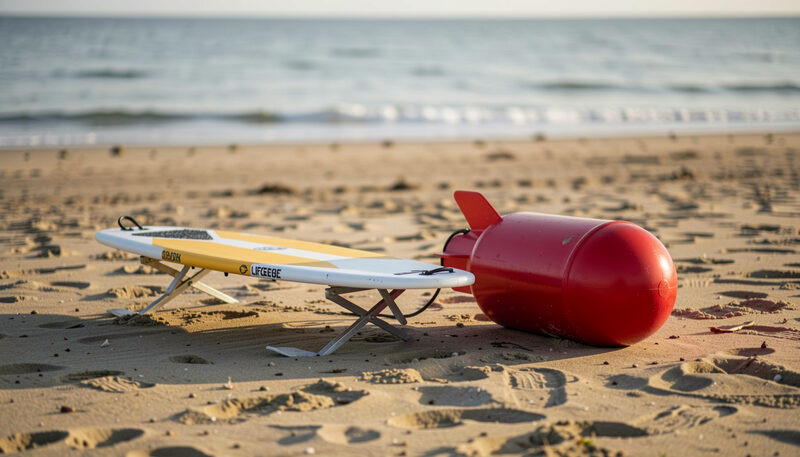
Open water is one of the great pleasures of living on a coast, and it is also where swimming becomes a serious business. The risks in the sea, a loch or a river are different from those in a pool, and they are manageable if they are understood. This guide sets out the safety knowledge that every open water swimmer should have before they get in.
Cold shock: the first minute
The most immediate danger in cold water is cold shock. On entering water below about fifteen degrees, the body reacts with a sharp intake of breath, a rapid rise in heart rate and a surge of blood pressure. This lasts only a minute or two, but during that time a swimmer can involuntarily breathe in water, especially if they plunge straight in.
The safe response is to enter gradually, or to accept the shock while keeping the face clear of the water until breathing settles. Wearing a wetsuit reduces the shock. Never dive or jump into cold water without knowing the depth and without having acclimatised.
Cold incapacitation: the slow danger
After the first minutes, cold water begins to cool the muscles and extremities. Hands and feet lose strength and dexterity, swimming becomes harder, and the swimmer loses the ability to grip or to climb out. This is called cold incapacitation, and it arrives sooner than most people expect, especially in winter. A swimmer who feels their hands going numb or their strokes weakening should get out immediately, not push on.
Time in the water should be measured deliberately in cold conditions, not left to feel. A common practice is to match minutes in the water to the water temperature in degrees, and never to stay in long enough to shiver violently.
Rip currents
A rip current is a narrow channel of water flowing away from the shore, often between sandbars or along a beach. It is one of the main causes of swimming incidents on open coasts. A rip is not always obvious, but it often shows as a gap in the breaking waves, a line of darker water, or foam moving steadily out to sea.
If caught in a rip, the instinct to swim straight back to shore is the wrong one, because it exhausts the swimmer against the current. The correct response is to stay calm, swim parallel to the shore until out of the current, then swim back in. A rip will not pull a swimmer under; it carries them out, and the way out of it is sideways.
Tides and currents
On an estuary like the Forth, tides run strongly. A swimmer entering on a flooding tide can find the return much harder, and one caught on an ebbing tide can be carried away from the exit. The rule is to check the tide times before swimming, to know which way the water is moving, and to plan the swim so that the return is with the tide or in slack water.
Currents also form around headlands, harbour walls and river mouths. These are places to avoid unless the swimmer knows them well.
Looking after someone in trouble
If a swimmer gets into difficulty, the priority is to avoid becoming a second casualty. Shout for help, call the emergency services, and reach out with something rather than going in. A tow float, a rope, a branch or a buoy can be extended to a swimmer without putting the rescuer in the water. Untrained rescuers who swim to a panicking person are a common cause of double drownings.
Once a casualty is out of the water, the recovery position, lying them on their side with the head tilted back to keep the airway clear, helps if they are unconscious but breathing. If they are not breathing, CPR is needed. First aid training is worth having for anyone who swims in open water regularly.
Planning the swim
The habits that keep open water swimmers safe are simple: never swim alone, tell someone where you are going, check the tide and weather, know the exit point, carry a visible float, and be willing to abandon a swim if conditions change. Cold, current and visibility are the three things to think about every time.
The practical side of starting on the Forth coast is in sea swimming in the Forth, and the indoor foundations that come first are in the learn to swim section. The Royal Life Saving Society publishes detailed water safety guidance at rlss.org.uk. Nothing in this article replaces proper training or local knowledge.
Water quality and other hazards
Cold and current are not the only things to think about. In fresh water, there is a small risk of illness from bacteria carried in rat urine, which is why swimmers cover cuts and avoid swallowing water, and why anyone who develops flu like symptoms after a freshwater swim should mention it to a doctor. In the sea, the main extra hazards are boat traffic and submerged objects near harbours and slipways.
Signs of trouble in another swimmer
A swimmer in difficulty rarely shouts or waves in the way people expect. More often they go quiet, stop making progress, or slip below the surface and back up. Anyone watching from the shore should look for a swimmer who has stopped moving forward, whose head is low in the water, or who is drifting against the current. Noticing that early is the most useful rescue skill there is.