Swimming Life
Masters Swimming
What masters swimming is, who it suits, how adult squads train, what masters galas involve and how to return to swimming after years away from a pool.
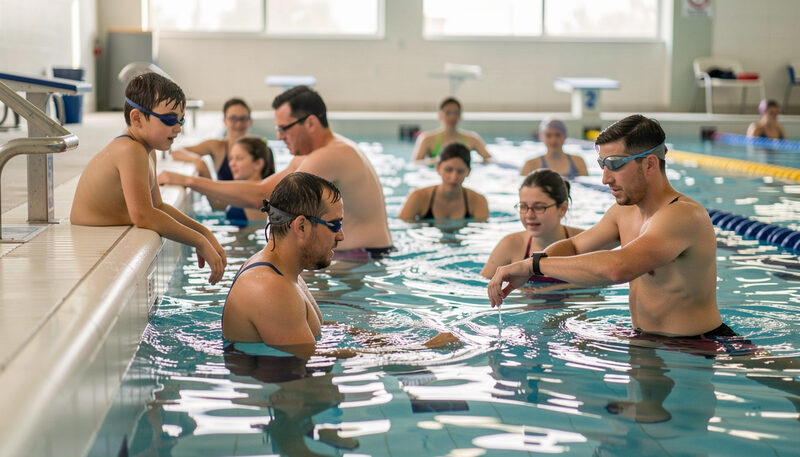
Masters swimming is the name the sport gives to adult swimming beyond the junior years, and it covers a wider range of people than the name suggests. It includes the former club swimmer who wants to race again, the parent who learned as an adult, and the person who simply wants a structured session with other grown ups. This guide explains what masters swimming is, who it suits, and how to get back into the water after a long break.
What masters swimming is
Masters swimming is open to adults above the junior competitive age, and it is organised into age groups so that swimmers compete against others of a similar age. At its simplest, it is an adult squad: a coached session with a warm up, a main set and a cool down, swum with other adults. At its most serious, it includes regional, national and international masters championships.
The beauty of it is that both ends of that range swim in the same session. Masters squads are famously mixed, with former internationals training alongside people who took up swimming in their forties. The atmosphere is usually supportive rather than cut throat, because most masters swimmers are there for the sport rather than a career.
Who it suits
Masters swimming suits anyone who wants more than a solo length swim. If you find lane swimming aimless, a coached session gives structure and pushes you harder than you would push yourself. If you swam as a child and miss the club environment, it restores it. If you are training for open water, triathlon or a charity swim, a masters session is the most efficient way to build the fitness and technique for it.
It is also a good route back into the sport for people who stopped in their teens. Many adults believe they have forgotten how to swim; in fact, the technique usually returns quickly once the fitness is rebuilt.
What a session looks like
A typical masters session starts with a warm up of several hundred metres, often mixed strokes. The main set is the work: a series of lengths at a given pace, sometimes on a time interval, sometimes with drills and kicking. It ends with a cool down. The coach writes the set on a board, and swimmers follow it at their own level, adjusting the interval to their ability.
If you have never followed a written set or used a pace clock, the first few sessions will feel busy. They become second nature quickly, and the pace clock, which tells you when to start each repetition, is the one piece of pool equipment worth learning early.
Competition for adults
Masters swimmers can compete at galas organised for adults, with the same events as junior competition: freestyle, backstroke, breaststroke, butterfly and individual medley, over a range of distances. Times are recorded and compared within age groups, and the same qualifying and entry conventions apply. For someone who raced as a child, a masters gala is a familiar and welcoming return. The format is described in how a swimming gala works.
Returning after a long break
The hardest part of returning to swimming is usually the first length. After years away, the stroke feels clumsy and the breathing is wrong. The fix is patience and a little coaching. A few lessons to rebuild technique will save months of frustration, and starting with short, frequent sessions beats one long exhausting swim a week.
It also helps to leave the ego in the changing room. The swimmer in the next lane may be faster, but they have their own history and their own reasons for being there. Masters swimming is a long game, and progress comes back faster than most people expect. The fitness side of it is covered in the guide to swimming for fitness, and the adult swimming world generally is introduced in the swimming life section. The governing body publishes masters information at scottishswimming.com.
Getting started
Most masters squads welcome new swimmers, but they usually expect a basic level of competence: the ability to swim a few lengths of more than one stroke without stopping, and to be safe in deep water. If that sounds like a stretch, a block of adult lessons first, or a few months of regular lane swimming, will make the step into a squad much easier.
It is worth contacting the coach before the first session to ask what to expect, what to bring and whether there is a trial. A good squad will place a new swimmer in an appropriate lane and explain the set rather than leaving them to guess.
The first month
The first month in a masters squad is humbling for most people. The sets are longer than a solo swim, the intervals are tighter than expected, and the swimmer discovers muscles they had forgotten. This is normal. The trick is to swim within yourself, to use the easier lane until the fitness returns, and to accept that technique will be rough before it improves.
Within a few weeks, most swimmers find their breathing settles and the sets become manageable. Within a few months, times begin to fall. The adults who thrive in masters swimming are the ones who enjoy the process rather than measuring themselves against the fastest swimmer in the lane. For the fitness side of it, see the guide to swimming for fitness.